

For the first birthday my husband and I celebrated together, I gave him Shopify stock. 8 years later, still the most romantic thing I’ve ever done. Only recently dethroned by our literal child.
It’s been with me on my whole journey, too: after dropping out of law school and landing on an ecommerce team, I became a Shopify admin on day 1.
And I really never looked back.
Seriously, never: when I was agency-side, my rule for taking on a client was either a) they were already on Shopify, OR b) they’d let me migrate them. I wouldn’t be working at Salt & Stone if they weren’t on Shopify. It really is That Serious.
Since then, I’ve launched brands you have in your home. I’ve broken Shopify records. I’ve watched this industry change, then change again and again. But across every brand, era, & job, it’s the 1 thing that’s never moved for me.
Today, I’d like to answer a question I’ve been asked, but never answered publicly: why is Shopify the only decision I’ve never reconsidered?
YOU DON’T HAVE TO FOUND IT TO OWN IT
So, I don’t own a brand. But I definitely FEEL ownership. Where founders take that first crazy leap, growth & performance & marketing have to catch it and make it real.
“Making it real” is our job. Maybe your name isn’t on the cap table, but you’re still lying awake over CAC or a launch that flopped or what next weekend’s numbers are going to be.
Because we take it personally.
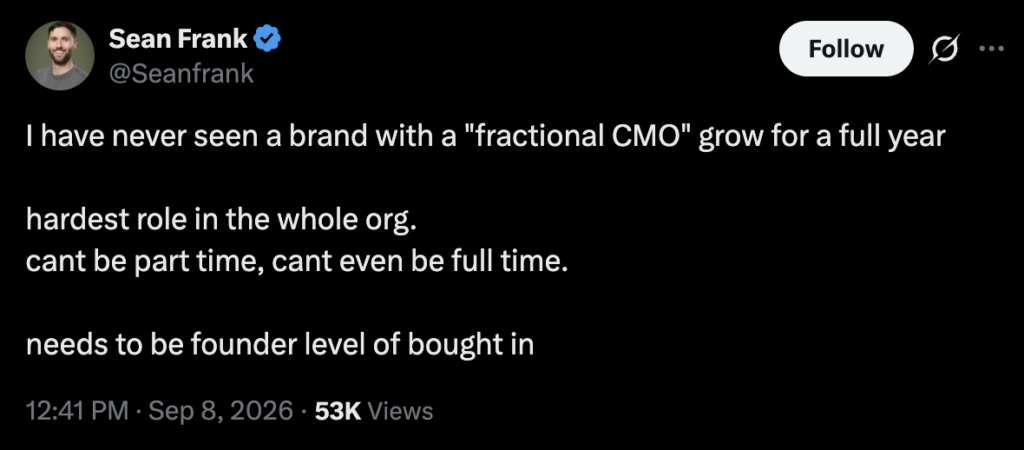
Taking it personally teaches you 1 thing the hard way: go as hard as you physically/mentally can, but be a total freak about WHERE you go hard.
Like yes, I DO pull my reporting by hand every morning, because I refuse to get disconnected from my own business. I DO test new tools every month to make sure my stack is the best it can be. But you also couldn’t PAY me to run my own sales tax or hand-source a bunch of influencer/affiliates on my own. The big C-Suite move is knowing the things you yourself MUST do, and intelligently handing off the rest to whoever is already the best at it.
The infrastructure Shopify builds is the ultimate example of this.
They’ve spent 20 years obsessed with getting ecom infrastructure right. So why on earth would I try to fake my way through it myself?
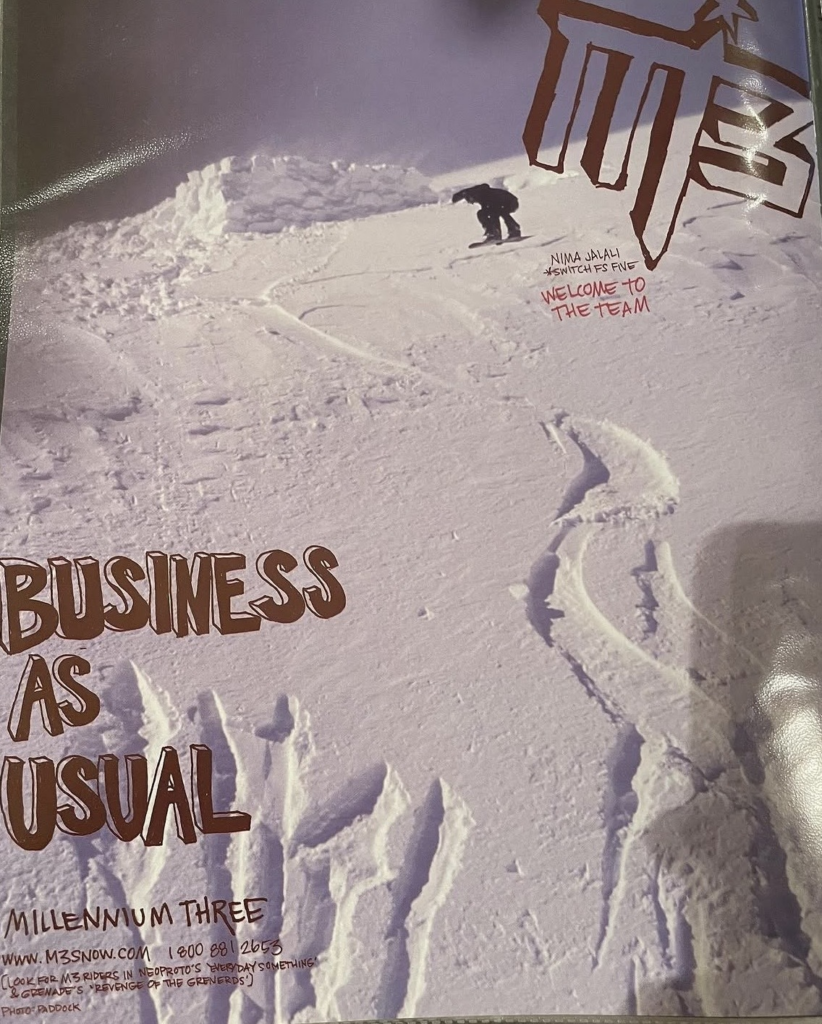
Strong foundations are what let Salt & Stone exist in the first place. Our founder & CEO, Nima, was a professional snowboarder until an injury + a total lack of personal care he’d actually want to use, pointed him elsewhere. He spent 9 years building it before it really popped, and having Shopify’s foundation underneath him meant he could figure out the stuff only HE could do.
F1 DRIVERS DON’T BUILD ROADS.
Nima took 9 years. Chad Janis took about 9 months. Rude. But they were both building on the same foundation.
Because before Chad built Grüns, he was in private equity, specializing in DTC. He personally helped deploy around $1.4 BILLION of total investment into brands like Brooklinen, Chubbies, Ruggable, and Dr. Squatch.
He had already looked into the guts of some of the biggest, most muscular ecom stacks on earth. Every tool & platform. And what did he choose to build his gummy empire on top of?

Out of the box, it let him build everything himself. Emails, flows, subscriptions. Everything he set up in the first week is still 80% of the site. Yes, the site that does 9 figures and just sold to Unilever.
A guy who could architect anything he wanted looked at the most important decision of the entire business and picked the proven, someone-already-solved-this foundation for his specific strategy: massive scale, right out of the gate.
F1 drivers don’t build the roads, they just need to be able to trust them enough to put their pedals to the metal. If you’re shoveling coal into a train engine, you don’t have time to build the tracks at the same time. Okay enough with the metaphors.
In Chad’s words, “It’s Shopify or bust if a company wants to scale fast without issues.”

THEN, THE ROBOTS STARTED SHOPPING
The other reason I’ll never switch: ecom changes faster than you can blink. And yet, I’m never scared I’ll be caught without the tools I need to keep up. Because someone else is in charge of evolving capabilities and that someone is Shopify.
Take the biggest change in ecom right now: how people are shopping with AI. Shoppers are showing up to sites way later AND more informed/further in their decision than they were even 6 months ago. And it’s about to get bigger: Shopify’s new holiday retail report found 65% of shoppers plan to use AI for at least one shopping task this holiday season.
But I’m not panicking. Because I don’t have a lesser platform that’s left me to figure out the machines on my own. Instead, I’m making a plan and spending on top of the agentic structures Shopify already has in place.
So, while I’m going nuts shoveling coal cash into GEO agencies, Reddit strategies, blog plans, FAQs on every PDP because it turns out explaining the difference between a mist and a perfume helps the machine see us…I know that Shopify’s Catalog is feeding my product info straight into the assistants, so when someone asks, we’re already in the chatbot’s answer.
(This agentic tooling is what Chad & Grüns are playing with to create a brand new subscription acquisition surface, btw. Handy, when that’s 90% of your business.)
Or take PAIGE, whose new customer service agent on their Shopify site is already handling 30% of their tickets right out of the gate. CHOO CHOO 🚂

3 very different businesses, built on top of the same plumbing/railroad tracks/raceway. Because of that, we can trust we’ll be wired for the future, WHATEVER that future ends up being. Can I get another choo choo? 🚂
STICK TO THE RAILROADS & THE TRACKS THAT YOU’RE USED TO
Sometimes you still have to learn these lessons the hard way. I’ve migrated multiple brands off headless into Shopify. Simon Pearce was 1. Parachute was another, and I feel confident in saying they’d both do it again tomorrow.
Parachute actually started on Shopify, but moved to a headless site in 2019 so they could do some complex custom actions, all of which I’m sure was very logical…at the time.
But that choice put them on the path of having to keep their train moving, AND build their own railway tracks.
Without Shopify, they lost regular native capability upgrades. They also had to go from a 2-person engineering team into a 14-person-engineering-slash-babysitting team, just to maintain basic tools like a checkout.
So, in 2024, Parachute came home to Shopify. And not only did they recover functionality at enterprise scale, they also got:
- $1M+ saved in annual operating costs
- $30,000 monthly revenue from a $9/month app
- A lot of other things I recommend looking at (the video interviews w/the VP Retail & SVP Ops are excellent)
SOMETIMES IT REALLY DOESN’T DEPEND
“It depends” is one of my favorite Marketing clichés, because almost every time, it’s true. Your tech stack, your strategy, your budget, everything changes based on your specific scenario.
But I really believe there is 1 place it does NOT depend, and that’s Shopify. It’s always been Shopify. Why am I getting emotional?

No matter how much ecom changes, 2 things stay the same:
- Every really great owner-operator is brave enough to reinvent what a brand can do, without blowing up works, and has the wisdom to know the difference.
- To take big risks, you need solid ground to stand on. And whether it’s a vintage shop in your garage or a billion-dollar company, the most solid ground to stand on is Shopify.
So, go be brave with the fun stuff, hunting the robots and doing the weird launches and taking down the giants and taking risks that scare you but also bring you glory. As long as your feet have somewhere solid to catch you, like I’ve had, you’ll be just fine. My middle name says so.
Yours in Shopification,
Ari Murray